



Beyond oil: India-UAE ties power a new strategic era
06:44PM Tue 16 Jun, 2026
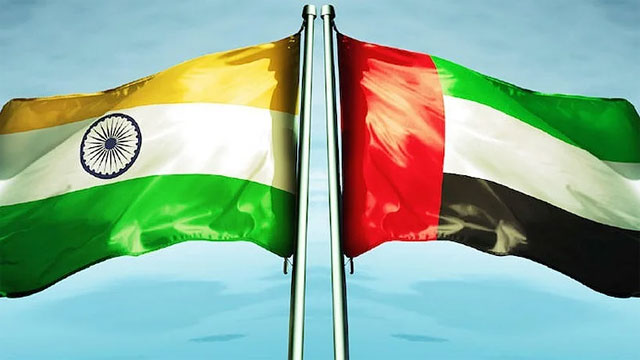
New Delhi, Jun 16: In an era marked by geopolitical shifts, technological disruption and the search for resilient economic partnerships, the relationship between India and the United Arab Emirates has emerged as one of the most dynamic strategic engagements in the world.
What was once largely defined by energy trade and a thriving expatriate community has evolved into a multidimensional partnership spanning investment, technology, logistics, defence, food security, renewable energy, digital infrastructure and global governance.
As tensions and uncertainties continue to shape the wider West Asian landscape, India and the UAE are demonstrating how strategic cooperation can expand beyond traditional sectors.
The two countries are increasingly positioning their partnership as a model for economic integration, innovation-led growth and pragmatic diplomacy.
Beyond hydrocarbons
For decades, hydrocarbons have formed the backbone of India-UAE economic relations.
The UAE remains one of India's most important energy partners and a major supplier of crude oil. Yet the relationship today is defined by a much broader agenda.
Bilateral trade has expanded rapidly following the signing of the Comprehensive Economic Partnership Agreement (CEPA), which came into force in 2022.
The agreement accelerated market access, boosted exports and strengthened supply-chain connectivity between the two economies. Trade volumes have continued to grow, making the UAE one of India's leading trading partners.
The transformation is visible in the nature of investments as well. Emirati sovereign wealth funds and companies are increasingly investing in Indian infrastructure, logistics, ports, renewable energy, technology and manufacturing.
Simultaneously, Indian firms have expanded their presence across the UAE's financial, digital and industrial sectors.
Observers increasingly describe the relationship as a strategic economic compact rather than a conventional bilateral partnership.
This shift reflects the growing recognition that both countries see each other as long-term partners in shaping regional and global economic trends.
Strategic convergence in a changing region
The evolving geopolitical landscape of West Asia has added a new strategic dimension to India-UAE ties.
As countries across the region adapt to changing security realities, both New Delhi and Abu Dhabi have emphasised stability, economic connectivity and strategic autonomy.
Recent analyses by leading policy institutions note that India and the UAE share an increasingly aligned vision on regional cooperation, maritime security and economic resilience.
Their engagement is no longer limited to bilateral issues but increasingly extends to multilateral frameworks and emerging geopolitical initiatives.
The establishment of platforms such as the I2U2 grouping involving India, the UAE, Israel and the United States reflects this broader strategic convergence.
Through such mechanisms, the two countries are collaborating on projects involving food security, clean energy, infrastructure and advanced technology.
The partnership has also demonstrated remarkable consistency despite shifts in regional dynamics. This continuity has strengthened confidence among businesses, investors and policymakers on both sides.
Technology, innovation and the new growth frontier
One of the most significant developments in India-UAE relations is the growing emphasis on technology-driven collaboration.
Artificial intelligence, fintech, digital payments, cybersecurity, smart cities and advanced manufacturing have become central pillars of bilateral engagement. The UAE's ambition to become a global innovation hub aligns closely with India's expanding digital economy and technology ecosystem.
India's globally recognised digital public infrastructure, including Aadhaar, Unified Payments Interface (UPI) and digital governance platforms, has attracted international attention.
The UAE has shown a strong interest in collaborating with India on digital transformation and next-generation technologies.
This technology partnership extends beyond government initiatives. Start-ups, venture capital firms, research institutions, and technology companies from both countries are increasingly exploring collaborative opportunities.
The UAE's strategic investments in digital infrastructure and India's vast pool of technological talent have created a complementary framework capable of driving innovation at scale.
Building corridors of connectivity
Connectivity has emerged as another defining feature of the modern India-UAE relationship.
The two countries are investing in new trade routes, logistics networks and transport infrastructure aimed at improving regional and global connectivity. Their cooperation forms an important component of emerging economic corridors linking South Asia, the Middle East and Europe.
Ports, shipping networks and logistics hubs are playing an increasingly important role in facilitating trade flows. The UAE's geographic position as a gateway connecting Asia, Africa and Europe complements India's growing role as a manufacturing and economic powerhouse.
This emphasis on connectivity is not merely about transportation. It represents a broader vision of integrating supply chains, improving trade efficiency and creating new opportunities for economic growth.
Such initiatives have gained additional significance as countries seek more diversified and resilient trade networks in an increasingly interconnected world.
Energy transition creates new opportunities
While hydrocarbons remain important, clean energy is rapidly becoming a key area of cooperation.
Both India and the UAE have committed substantial resources towards energy transition, sustainability and climate action. Renewable energy, green hydrogen and sustainable technologies are now prominent areas of bilateral engagement.
The UAE's investments in renewable energy projects and India's ambitious clean energy targets create significant opportunities for collaboration. Joint initiatives in solar energy, hydrogen production and sustainable infrastructure are helping redefine the energy partnership.
Prime Minister Narendra Modi has often highlighted the growing scope of India-UAE cooperation beyond conventional energy.
During recent engagements, he described the relationship as a partnership driven by innovation, investment and shared development goals.
Similarly, UAE leaders have consistently emphasised the importance of building future-oriented economic partnerships capable of delivering long-term prosperity.
People-to-people bonds remain the foundation
At the heart of the strategic partnership lies one of the world's strongest people-to-people connections.
More than three million Indians live and work in the UAE, contributing significantly to the country's economy and social fabric. Their presence has created enduring cultural, educational and economic links between the two nations.
The Indian diaspora continues to serve as a bridge connecting businesses, institutions and communities. Cultural exchanges, educational partnerships and tourism have further strengthened these ties.
The UAE's recognition of India's growing global influence and India's appreciation of the UAE's role as a regional economic hub have reinforced mutual trust and understanding.
This human dimension provides a unique depth to the relationship, distinguishing it from many purely transactional partnerships.
A future-oriented strategic partnership
As global economic and geopolitical centres continue to evolve, the India-UAE relationship appears increasingly positioned for long-term relevance.
The partnership's expansion into technology, innovation, renewable energy, infrastructure, logistics and strategic cooperation reflects a shared commitment to future-oriented growth.
Rather than relying solely on historical strengths, both countries are actively building new pillars of engagement suited to the demands of the twenty-first century.
The transformation from an energy-centric relationship to a comprehensive strategic partnership illustrates the scale of ambition on both sides.
It also highlights how middle powers can leverage economic complementarities, technological capabilities and diplomatic agility to create mutually beneficial partnerships.
In a world searching for stable growth engines and reliable strategic relationships, India and the UAE are demonstrating that cooperation anchored in trust, innovation, and shared interests can generate opportunities far beyond traditional boundaries.
The story of India-UAE relations today is no longer simply about oil shipments crossing the Arabian Sea. It is increasingly about data flows, investment corridors, technology partnerships, clean energy projects and a shared vision for a more connected and prosperous future.
Photos