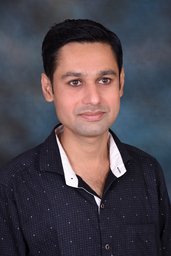


Abdul El-Sayed could become the first Muslim Senator in US history. Who is he?
05:53PM Thu 6 Aug, 2026
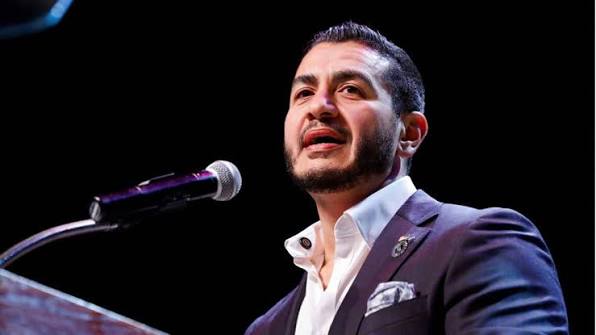
In a seismic political victory that has sent shockwaves through both Midwestern battleground politics and the national Democratic establishment, Dr Abdul El-Sayed officially secured the Democratic nomination for the United States Senate in Michigan on Wednesday.
By overcoming an unprecedented barrage of outside super PAC spending and defeating establishment favourite US Representative Haley Stevens in a gruelling primary, El-Sayed has made political history as the first Muslim candidate ever nominated for the US Senate by a major American political party.
The Associated Press called the high-stakes primary early morning after an intense night of vote counting that left the two frontrunners separated by less than a single percentage point.
Final unofficial tallies showed El-Sayed capturing 48.5 per cent of the vote (740,950 votes) to Stevens’s 47.5 per cent (726,057 votes), yielding a razor-thin margin of 14,893 votes out of nearly 1.5 million ballots cast statewide.
The victory positions the 41-year-old physician, epidemiologist, and former public health administrator to face Republican nominee Mike Rogers, a former US Representative and House Intelligence Committee Chairman, in the November 3, 2026 general election.
The open-seat contest — triggered by the retirement of two-term Democratic Senator Gary Peters — is widely viewed as one of the most vital battlegrounds that will determine control of the US Senate in the upcoming midterm elections.
While Muslim Americans have achieved election to the US House of Representatives — including Michigan’s own Rashida Tlaib, Minnesota’s Ilhan Omar, and Indiana’s André Carson — no Muslim candidate in American history has ever won a major party nomination for the 100-member US Senate.
If victorious in November, El-Sayed would break this historic barrier.
A Davis vs Goliath battle in the Rust Belt
The August 4 Democratic primary was described by local political observers as Michigan’s most competitive and ideologically defining Democratic Senate primary in more than three decades.
For months, the race served as a national proxy war over the soul and future direction of the Democratic Party, pitting the party’s progressive, grassroots base against its moderate, donor-backed establishment.
Stevens, a four-term congresswoman representing parts of Oakland County, entered the race with the institutional weight of the party behind her. She secured high-profile endorsements from outgoing Peters, prominent labour leaders, and prominent members of the Democratic congressional delegation.
However, what transformed the contest into an extraordinary political showdown was the staggering asymmetry in outside expenditure.
Satellite super PACs and independent expenditure groups poured more than $40 million into the primary campaign — overwhelmingly dedicated to boosting Stevens or carpet-bombing television and digital airwaves with negative advertisements targeting El-Sayed.
Major contributors included political action committees affiliated with the American Israel Public Affairs Committee (AIPAC) and corporate donor networks alarmed by El-Sayed’s progressive economic agenda.
Despite being outspent by an estimated ratio of more than 15-to-1 in satellite group funding, El-Sayed built a formidable statewide coalition.
Fuelled by thousands of small-dollar donors, a corps of young field organisers, strong turnout in urban centres like Detroit and Flint, heavy support from university towns like Ann Arbor and East Lansing, and massive enthusiasm in Wayne County’s Arab American communities, El-Sayed eroded Stevens’s early polling leads over the final month of the campaign.
By Wednesday morning, following Stevens’s concession call to El-Sayed, the remaining contender in the early three-way race — State Senator Mallory McMorrow, who had informally paused her campaign weeks earlier — threw her full support behind the nominee.
"I'm proud to give Abdul my full endorsement and support as we head to November together as a unified party," McMorrow stated in an official release Wednesday morning.
Addressing a raucous crowd of supporters and campaign workers gathered at the Spirit of Detroit landmark in downtown Detroit on Wednesday afternoon, El-Sayed addressed the deluge of money that had been deployed against his candidacy.
"They spent an unprecedented amount of money to beat us," El-Sayed declared.
"They brought every dollar, every super PAC, and every political attack they could buy. But this campaign proved something fundamental: people beat money when people stand together. We are still standing because Michiganders are tired of a political system that serves billionaires over working families."
Meet Dr Abdul El-Sayed
Born on October 31, 1984, in the Detroit suburb of Rochester Hills, Michigan, Abdulrahman El-Sayed grew up in a household centred around engineering, education, and public service.
His father, Mohamed El-Sayed, emigrated from Egypt to pursue graduate studies in engineering at Wayne State University. Abdul was raised by his father and stepmother, Jacqueline, a native of Gratiot County whose family heritage in rural Michigan dates back to the 19th century.
A standout student-athlete at Andover High School in Bloomfield Hills, El-Sayed was captain of his high school football, wrestling, and lacrosse teams.
He went on to attend the University of Michigan, where he earned a Bachelor of Science in biology and political science with highest distinction while playing for the university’s men’s club lacrosse team.
2007: BS in Biology & Political Science, University of Michigan (Highest Distinction)
2011: DPhil in Public Health, Oxford University (Oriel College, Rhodes Scholar)
2014: MD, Columbia University College of Physicians and Surgeons
2015-2017: Executive Director & Health Officer, Detroit Health Department (Aged 30)
2018: Candidate for Governor of Michigan (Finished 2nd in Democratic Primary)
2023-2025: Director, Wayne County Department of Health, Human & Veterans Services
2026: Democratic Nominee for US Senate (Michigan)
El-Sayed’s academic achievements brought national and international recognition. He was awarded a prestigious Rhodes Scholarship in 2009, attending Oriel College at the University of Oxford, where he completed his Doctorate of Philosophy (DPhil) in social epidemiology and public health.
He subsequently earned his Doctor of Medicine (MD) from Columbia University College of Physicians and Surgeons.
By 2014, El-Sayed joined Columbia’s Mailman School of Public Health as an assistant professor, authoring over 100 peer-reviewed scientific articles and book chapters investigating social inequality, health disparities, and system-level population health solutions.
Rebuilding Detroit’s health infrastructure
In August 2015, following Detroit’s historic municipal bankruptcy, mayor Mike Duggan appointed the then-30-year-old El-Sayed as Executive Director and Health Officer of the Detroit Health Department.
The appointment made him the youngest health officer in any major American city.
Inheriting a privatised and severely depleted public health apparatus, El-Sayed spearheaded a complete restructuring of the department.
Key initiatives under his tenure included:
Lead poisoning mitigation: In the wake of the nearby Flint Water Crisis, El-Sayed instituted mandatory lead-water testing across all Detroit public schools and daycares, forcing remediation in contaminated facilities.
Vision for Detroit kids: He launched an innovative municipal programme providing free eye exams and free prescription eyeglasses directly to thousands of low-income public school students.
Environmental accountability: El-Sayed took on major industrial actors, including demanding emission cutbacks from Marathon Petroleum’s Southwest Detroit refinery to protect local air quality in high-asthma ZIP codes.
El-Sayed stepped down from his Detroit health post in early 2017 to launch his first bid for public office in the 2018 Michigan gubernatorial primary.
Although he finished second behind Gretchen Whitmer, his progressive platform won praise across the state and established him as a major voice on the party's left flank.
In December 2022, El-Sayed was tapped to lead the Wayne County Department of Health, Human, and Veterans Services — serving 1.8 million residents in Michigan's largest county.
During his tenure, which lasted until April 2025 when he launched his Senate campaign, El-Sayed orchestrated a groundbreaking municipal program designed to eliminate up to $700 million in medical debt for approximately 300,000 residents.
Outside of government, El-Sayed has maintained a prominent national profile as an author and media communicator. He co-authored Medicare for All: A Citizen's Guide (Oxford University Press) and hosted the popular health-and-politics podcast America Dissected for Crooked Media.
Where El-Sayed stands on policy
El-Sayed’s platform for the 2026 US Senate election centres on structural economic changes, aggressive campaign finance overhaul, and universal healthcare guarantees.
His core platform pillars comprise:
Medicare for all & single-payer universal healthcare
Campaign finance reform & repeal of Citizens United
Corporate anti-trust enforcement & lowering cost of living
Federal protections for labour unions & worker wages
De-escalation & reform in US Foreign Assistance Policy
Healthcare reform
As a physician and epidemiologist, El-Sayed has made universal, single-payer healthcare the centerpiece of his political identity.
He advocates for transitioning the US healthcare apparatus to a comprehensive Medicare for All model, eliminating private insurance premiums, co-pays, and deductibles in favour of a publicly funded system covering medical, dental, vision, and mental health services.
During his campaign speeches, El-Sayed frequently highlighted his experience serving on US President Joe Biden's 2020 Unity Task Force for Healthcare, asserting that while incremental prescription drug price caps were a positive first step, systemic restructuring is necessary to stop medical bankruptcies.
Money in politics & Corruption
A fierce critic of the Supreme Court's Citizens United ruling, El-Sayed refused all corporate PAC contributions during his primary bid, relying exclusively on individual contributions and grassroots union support.
His legislative goals include:
Enacting federal legislation to mandate full transparency for dark-money non-profit organisations.
Banning members of Congress and their immediate family members from trading individual stocks while in office.
Establishing federal matching funds for small-dollar political donations to reduce reliance on wealthy megadonors.
Economic relief & inflation
Targeting kitchen-table issues that resonate strongly across Michigan's industrial and rural heartlands, El-Sayed’s campaign highlighted utility price caps, federal anti-price-gouging statutes for grocery conglomerates, expanded child tax credits, and federal subsidies to expand affordable housing construction.
Foreign policy and civil rights
El-Sayed’s foreign policy stances drew sharp contrasts with his primary opponent. He called for conditioning US military assistance to foreign nations on human rights compliance, ending unrestricted military arms transfers to Israel, and championing self-determination and humanitarian protections in West Asia.
His stances mobilised significant support among young voters, progressive activists, and Arab and Muslim American communities across Michigan.
What next
With the primary concluded, attention shifts immediately to the general election matchup between Abdul El-Sayed and Republican nominee Mike Rogers.
Rogers, a veteran Republican politician who previously represented Michigan’s 8th Congressional District and served as Chairman of the House Intelligence Committee, secured his party’s nomination in a smooth primary process.
Political analysts predict that the Michigan Senate race will serve as a crucial bellwether for national voting trends in the 2026 midterms. The general election campaign will centre on several distinct battlegrounds across the Great Lakes State:
Wayne, Oakland, and Macomb counties (Metro Detroit): El-Sayed will need massive turnout in Wayne County (including Detroit and Dearborn) to build a vote cushion, while contesting the vote-rich suburban communities of Oakland and Macomb, where Stevens previously held strong support.
University communities: High youth voter engagement in Washtenaw County (Ann Arbor) and Ingham County (East Lansing) will be critical to El-Sayed’s turnout strategy.
The out-state suburbs and rural regions: Rogers will look to build major margins in rural northern and western Michigan, as well as traditional Republican strongholds in Ottawa and Kent counties.
With inputs from agencies
Photos