



Karnataka faces 41% rainfall deficit; experts warn of drought risk as govt urges preparedness
06:45PM Sat 27 Jun, 2026
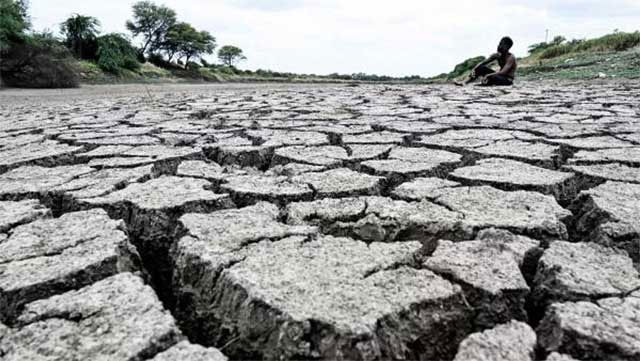
Bengaluru, Jun 27: Karnataka has recorded a 41 per cent rainfall deficit during the first month of the southwest monsoon, prompting the India Meteorological Department (IMD) and climate experts to describe it as a failed monsoon phase and warn of possible drought-like conditions if the situation persists.
According to IMD data, the state received only 95.2 mm of rainfall against the normal forecast of 162.5 mm. Bengaluru recorded 66 mm of rainfall against the normal 89 mm till June 25, IMD senior scientist C S Patil said.
Experts said the weak monsoon cannot be attributed to El Niño alone. They pointed out that the absence of significant weather systems over the Arabian Sea and the Bay of Bengal has further weakened the monsoon, a situation that could adversely affect both Karnataka's economy and the country's overall economy.
Patil said El Niño has been the major factor behind this year's weak monsoon, with pressure systems remaining extremely weak. He noted that no significant weather systems had formed over the Arabian Sea or the Bay of Bengal during the monsoon period. July and August, which are usually the peak monsoon months, will be crucial.
Due to the poor monsoon and changing wind patterns, temperatures have started rising across several parts of the state. Kalaburagi recently recorded a maximum temperature of 38°C. Overall, Karnataka has registered a rainfall deficit of around 42 per cent, while Coastal Karnataka has recorded a 50 per cent deficit and Bengaluru about 25 per cent.
Former Karnataka State Natural Disaster Monitoring Centre (KSNDMC) director G S Srinivasa Reddy recalled that the state experienced a 62 per cent rainfall deficit in 2023, the effects of which continued through 2024. He said the southwest monsoon has advanced northwards but remains weak. Its onset over the Andaman region was also poor.
He warned that the impact of El Niño is yet to reach its full intensity and could worsen further. Weak monsoon winds from the oceans may lead to a rise in temperatures during July and August if the monsoon continues to fail.
A climate expert associated with the government said cloud seeding is not a viable solution due to the lack of adequate cloud formation. By the time the government completes the tendering process and appoints experts, the season would be over. He stressed that short-term measures would not work and urged the government to focus on long-term solutions.
Prof Srinivasan, distinguished scientist at the Divecha Centre for Climate Change, IISc, said that while data points to the influence of El Niño, more research is needed to determine the exact cause of the monsoon failure, as global warming could also be playing a significant role.
In view of the possible drought-like conditions caused by the expected Super El Niño, deputy chief minister Dr G Parameshwara, earlier in the week, directed revenue officials to take precautionary measures and work in coordination with other departments to effectively tackle the situation in the coming months.
Meanwhile, district-wise data compiled by the Agriculture Department shows that more than 16 of Karnataka's 31 districts have received less than 50 per cent of their normal rainfall this monsoon.
Particularly worrying is the severe rainfall deficit in high-rainfall districts such as Shivamogga, Kodagu, Dakshina Kannada and Chikkamagaluru, where rainfall has been less than 40 per cent of the normal level, raising fears of heavy losses to agriculture.
According to the data available till June 26, Shivamogga recorded only 36 per cent of its normal rainfall, registering a 64 per cent deficit, while Kodagu recorded only 39 per cent of its normal rainfall, a deficit of 61 per cent. Chikkamagaluru and Dakshina Kannada have also recorded rainfall deficits of around 60 per cent.
Dakshina Kannada received only 306 mm of rainfall against the normal 766 mm by June 26. Chikkamagaluru recorded 105 mm against the normal 264 mm, Kodagu 168 mm against 429 mm, and Shivamogga 138 mm against 383 mm.
Vijayanagara district received only 29 mm of rainfall against the normal 71 mm, recording a 59 per cent deficit.
Udupi recorded 424 mm of rainfall against the normal 923 mm by June 26, a deficit of 54 per cent. Davanagere also recorded a 54 per cent shortfall.
Haveri, Uttara Kannada and Mysuru districts have registered rainfall deficits of around 53 per cent. Mysuru received 38 mm against the normal 82 mm, Haveri 47 mm against 99 mm, and Uttara Kannada 264 mm against the normal 564 mm.
In contrast, Bengaluru North, Bengaluru South, Bengaluru Urban, Mandya, Ballari, Kolar, Bagalkote, Chitradurga, Raichur, Chamarajanagar and Yadgir districts have received normal rainfall.
Tumakuru and Chikkaballapur have recorded excess rainfall of 28 per cent and 33 per cent respectively. Tumakuru received 80 mm against the normal 60 mm, while Chikkaballapur recorded 71 mm against the normal 55 mm.
Reacting to the situation, Uttara Kannada joint director of the Agriculture Department Shivaprasad Gavankar warned that if the rainfall deficit continues, crops across the state could suffer severe damage.
Photos