


Bhatkal rush at petrol pumps: All you need to know about fuel fears amid Iran-US-Israel tensions
09:44PM Thu 5 Mar, 2026
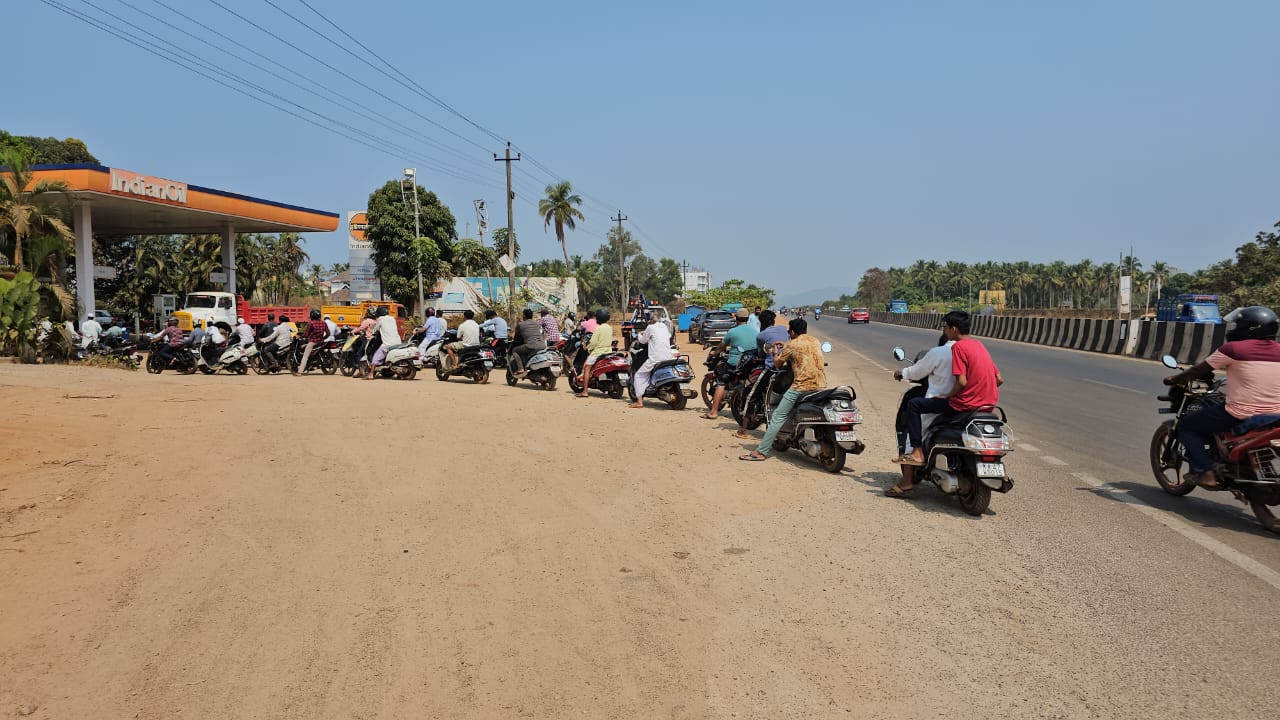
Bhatkal, 5 March,2026: (Bhatkallys News Bureau) Long queues were witnessed at several petrol pumps across Bhatkal as residents rushed to refuel their vehicles amid fears of a possible fuel shortage and a sudden rise in petrol and diesel prices following the escalating tensions involving Iran, the United States and Israel.
Many residents were seen filling their vehicle tanks, while some were also storing petrol in bottles and containers as a precaution. The rush appeared to be driven by concerns that the conflict in the Middle East could disrupt global oil supplies or lead to a sharp increase in fuel prices in India in the coming days.
Here is all you need to know about the situation.
No immediate reason for panic
There is no immediate reason for panic in India at present. The country is not running out of fuel right now.
India has sufficient reserves and incoming shipments of crude oil, which means there is no immediate shortage. Strategic and commercial petroleum reserves together can meet demand for several weeks to more than two months, according to reports by The Times of India.
Oil tankers that have already crossed key international shipping routes are also expected to reach India, helping meet demand for around 40 to 45 days, according to News24.
Authorities have also stated that retail petrol and diesel prices have not changed so far despite fluctuations in global crude oil prices.
Because of this, long queues or panic buying in some places are often triggered by rumours rather than an actual shortage of fuel.
Why the conflict matters for India:
India relies heavily on imported crude oil to meet its energy needs. Around 80 to 90 percent of the country’s crude oil is imported, and a large share of it comes from countries in the Middle East, according to Mint.
Another important factor is the Strait of Hormuz, a narrow sea route located near Iran. Nearly half of India’s oil imports pass through this route, according to Moneycontrol.
If the conflict affects shipping through the Strait of Hormuz, it could disrupt oil supply routes and create complications for several countries, including India.
What could happen if the conflict continues
If tensions continue or escalate, experts say three possible effects could be seen.
Oil prices may rise
Global crude oil prices have already shown signs of rising as traders fear supply disruptions due to the conflict, according to AP News.
Even a 10 dollar increase in crude oil prices can add about 13 to 14 billion dollars to India’s import bill, according to former NITI Aayog chief Amitabh Kant, as reported by Mint.
Petrol and diesel prices may increase later
Fuel prices in India do not always change immediately. However, if international crude oil prices remain high for a prolonged period, oil companies or the government may eventually revise retail petrol and diesel prices.
Some sectors may face pressure
Industries that rely heavily on energy such as fertiliser production, power generation and transport may face increased costs if oil prices remain high, according to Reuters.
What could trigger a serious crisis
India would face a more serious fuel challenge only if two major developments happen together.
One is if the Strait of Hormuz becomes blocked or unsafe for oil tankers for a prolonged period. The other is if global crude oil prices rise above 90 to 100 dollars per barrel and remain at that level for several months, according to Reuters.
Such a situation could begin affecting fuel prices, inflation and the broader economy.
What the situation means right now
For ordinary people in India, there is no immediate indication of a fuel shortage. Petrol and diesel prices have not increased so far.
However, if the conflict in the Middle East continues for a long time or expands further, it could eventually influence global crude oil prices and lead to higher fuel prices in India.
Photos


